Tuesday 12 May 2026 | UK road transport compliance briefings
The Golden Mount Transport Compliance News
Live Desk Operator licensing, DVSA, Traffic Commissioner, fleet compliance and UK government transport updates.
Breaking
Daily compliance watch: operator licensing, DVSA, Traffic Commissioner and UK government transport updates from The Golden Mount news desk.
Maintenance

How a fleet starts looking stronger when vehicle oversight is tested between the paperwork and the yard

17 Nov 2025 | The Golden Mount News Desk
Maintenance: How PSV operators can strengthen vehicle oversight for depot managers - The Golden Mount transport compliance news

Vehicle oversight can look excellent inside an office. Planners are populated, inspection dates are visible, defect logs are stored, brake reports exist and the monthly summary reads as though management has a good grip on the fleet. Yet the businesses that attract the hardest questions are often not the ones with no records. They are the ones where the records were allowed to drift away from the practical truth of the vehicles sitting in the yard.

That is why serious oversight is never only administrative. It sits in the space between the file and the fleet. The useful question is not simply whether the operator can show documents. It is whether the documents still describe the condition, usage and management reality of the vehicles they are supposed to govern.

Oversight improves when the business stops assuming the record and the vehicle still tell the same story and starts checking that they do.

The false comfort of complete paperwork

Complete paperwork is better than incomplete paperwork, but completeness alone is not proof of control. It is possible to keep every sheet and still supervise poorly if nobody is comparing the paper trail with live condition, recurring faults, site practice or management response. That comparison is where oversight becomes real.

Operators lose ground when they begin to treat the record as a substitute for inspection instead of a companion to it. The planner says the work happened. Fine. Does the vehicle history suggest the work was enough? The defect log says issues were closed. Fine. Does the same trailer keep returning with related problems? Those are the questions that make oversight credible.

Why yard reality matters so much

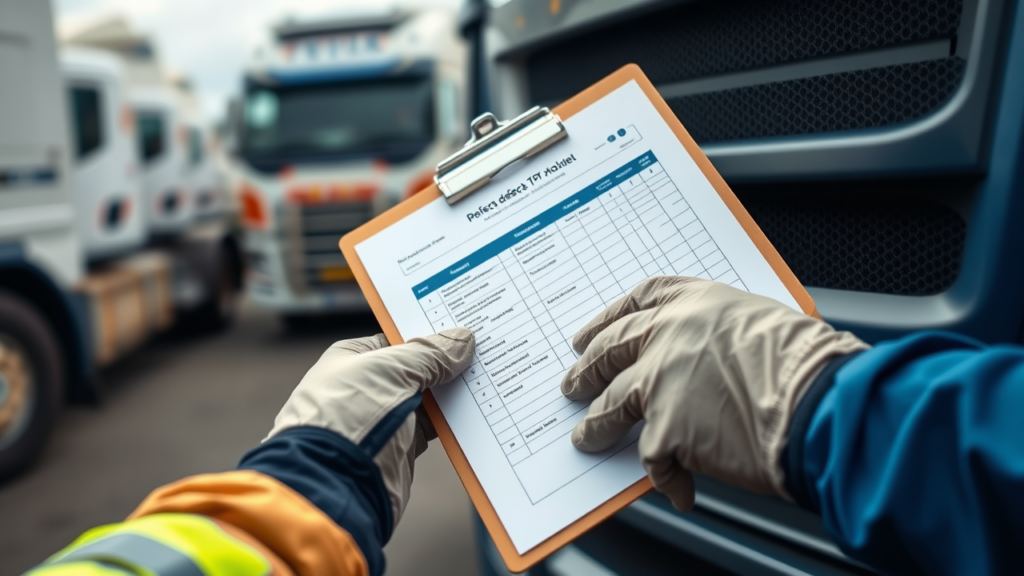
The yard tells the truth in a different language from the file. It reveals whether nil defects are believable, whether trailer rotation makes sense, whether vehicles under heavier use are being watched properly and whether local staff seem to understand the condition history of the fleet they are dispatching. An operator that never tests paperwork against those practical signs is governing only half the system.

This does not require theatrical inspections from directors. It requires occasional disciplined comparison by people who know what questions to ask and are prepared to follow the answer into the maintenance trail, the defect history or the management note.

The best place to start the check

Start with a small live sample. Choose one vehicle with a straightforward recent history, one with repeated defects and one that sits under heavier operational pressure than the rest. Read the file, then look at the practical picture: the route pressure, the defect pattern, the site understanding, the provider record and the management follow-up. Does the story hold together?

This kind of sample is more revealing than a large tidy spreadsheet review because it forces the business to confront real examples instead of averages. Oversight is usually won or lost in the specifics.

Where stronger operators separate themselves

They notice patterns early. They do not just record that one issue was fixed. They ask why a similar issue has appeared before, whether usage conditions are changing, whether the contractor record is slipping or whether daily checks are failing to surface something the workshop later finds routinely. That level of curiosity is the mark of a fleet that is supervised rather than merely administered.

It also improves management reporting. A board or senior review based on those questions tends to be sharper and more actionable than one built on whether the planner currently looks tidy.

The overlooked value of contradiction

Contradiction in a sample is useful if the business handles it well. Perhaps the paperwork suggests order, while the live example points to strain. That tension is exactly what an oversight system should detect. The point of the review is not to congratulate the file; it is to discover where confidence has drifted ahead of evidence.

Handled honestly, one uncomfortable sample can improve the whole fleet faster than a dozen reassuring summaries. The operator sees where the record stopped reflecting reality and can tighten the process before the same disconnect hardens.

This is also where depot-level knowledge becomes valuable. Yard staff, fitters and transport supervisors often notice early signs that do not yet look dramatic enough to change a report heading. A strong oversight process gives those signals a route into the formal record instead of leaving them as local intuition that never quite reaches management review.

What a stronger oversight record should show

It should show that somebody compared paper with practice, spotted what mattered, recorded the issue clearly and required a response that could be checked later. In other words, it should show judgement moving through the system. That is the sort of oversight that gives confidence substance.

For the underlying reference point, see Guide to maintaining roadworthiness. The official guide describes the framework. The operator’s own comparison between the file and the yard determines whether vehicle oversight is genuinely strong or only looks that way on a screen.

Source note: This article is an independently written briefing based on publicly available information. Primary source: www.gov.uk.
Editor In Chief

Simon Drever

Simon Drever is Editor in Chief of The Golden Mount, with 20 years of transport and logistics support, operational management and compliance experience. His editorial focus is practical transport reporting that explains what operators need to understand, evidence and fix when standards are tested properly.

Visit The Golden Mount

Related Briefings

More in this section