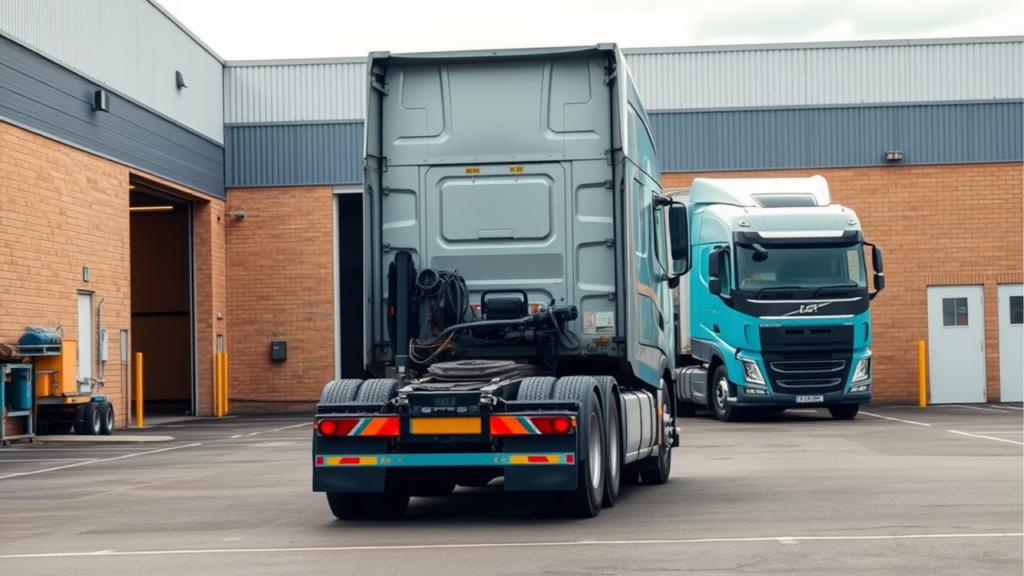
Why brake test evidence remains a board-level issue for licence holders

Why brake test evidence remains a board-level issue for licence holders matters inside the operator-licence file because the subject matters because it speaks directly to whether the business can prove a disciplined approach to vehicle safety and maintenance control.
The businesses that handle it best are rarely dramatic. They are simply the ones whose paperwork still reads clearly under pressure.
Brake-test evidence rises to board level because weak records there make every assurance below them sound thinner.
What the issue really comes down to
The subject matters because it speaks directly to whether the business can prove a disciplined approach to vehicle safety and maintenance control. For many operators, the difficulty starts when the file stops telling the story in a straight line and starts relying on explanation, memory or local knowledge instead.
Viewed through licence control, the question is not whether the business has a policy somewhere. It is whether the licence holder could open the record and show a competent outsider what happened without having to fill gaps verbally.
What to inspect first
The quickest route to the truth is always the live record, not the broad reassurance. Start with the paperwork or system entry that ought to settle the point straight away.
- where brake-test evidence sits in the file.
- whether the record is complete and consistent.
- what the business does when evidence is late, missing or unclear.
- The point of the check is to leave a cleaner trail than the one you started with.
Why operators still get caught out
Thin brake-test evidence usually suggests a wider weakness in how the business manages critical maintenance records.
The danger usually grows in a quiet way. One late entry becomes a pattern. One vague action point becomes a habit. Then the business reaches the point where a simple question can no longer be answered cleanly from the record alone.
The professional next step
If the evidence matters enough to be discussed at a senior level, it should be easy to locate and easy to follow.
The aim is not a longer file. It is a clearer one.
For the underlying reference, see Manage your vehicle operator licence.
Adam Walmsley
Adam Walmsley has spent more than 20 years working in and around operator licensing, transport compliance and regulatory risk for UK road transport businesses. His work focuses on helping operators understand what the Traffic Commissioner, DVSA and their own records are likely to reveal when a case is tested properly.